Building an AI-Creator Portfolio That Gets You Noticed
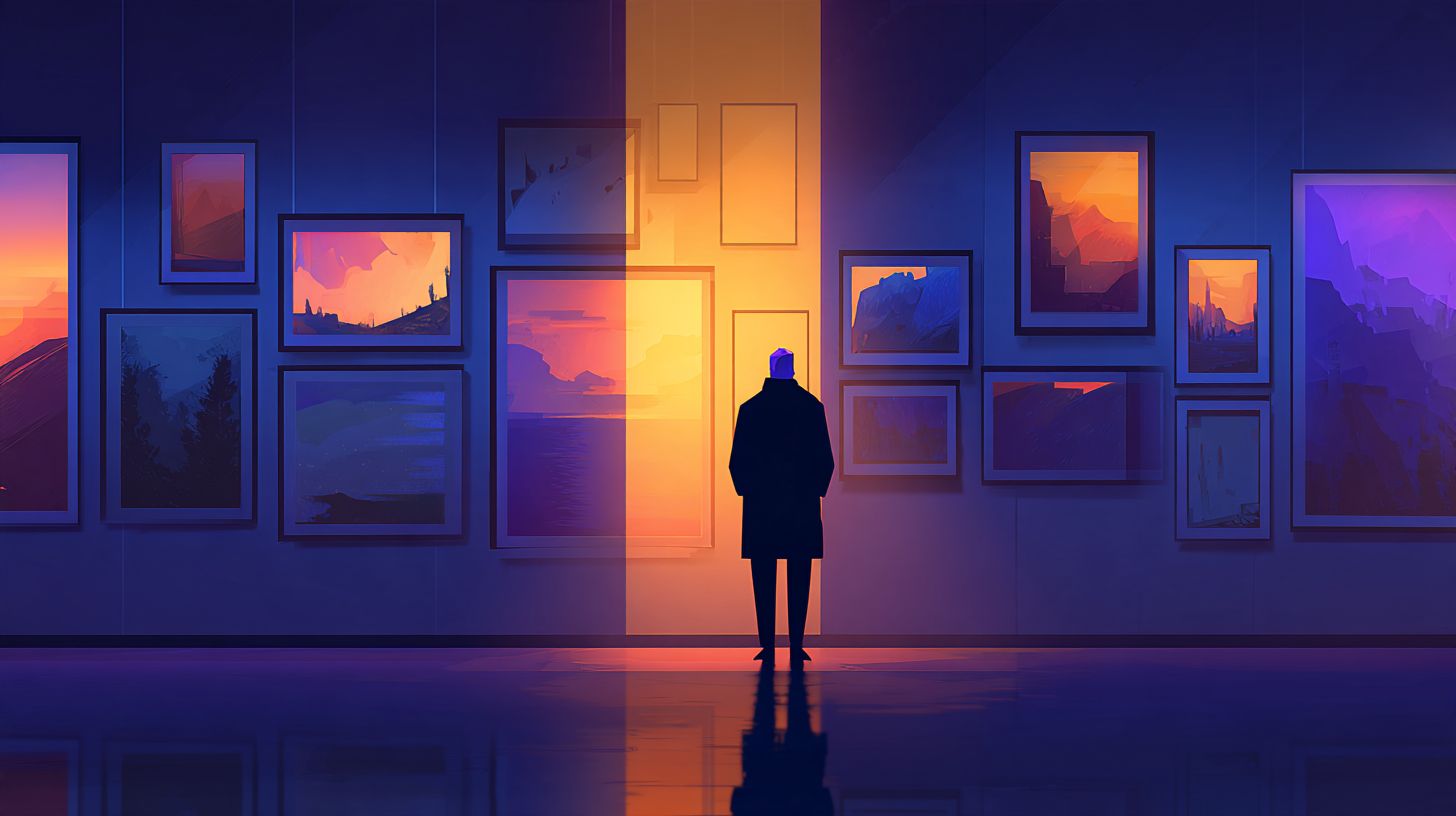
When everyone can produce a striking image, a striking image stops being remarkable. The bar for an AI-creator portfolio has moved. It is no longer enough to show that you can make something beautiful — almost anyone can roll a beautiful frame now. Your portfolio has to prove that you can make the right thing, on purpose, again and again. That is a different and much rarer signal.
Think of your portfolio as a persuasive document with a single job: convince the right person that working with you is a safe, exciting decision. Every choice you make should serve that argument.
Curate ruthlessly — quality beats quantity
The fastest way to weaken a portfolio is to include everything. A viewer judges you by your weakest piece, not your strongest, because the weak piece tells them what you will accept as "good enough." Ten exceptional works land harder than forty good ones. If a piece is only there to pad the count, cut it.
A useful test: for each piece, ask "what does this prove that nothing else here proves?" If the honest answer is "nothing," it is a duplicate of a stronger entry and it dilutes the set. Keep the one that makes the point best.
Show a point of view, not just range
Range is a trap if it has no center. A portfolio that swings from cyberpunk to watercolor florals to corporate icons reads as "I can imitate anything" — which, in an age of imitation machines, is not a selling point. A point of view reads as "this person sees the world a particular way, and I want that lens on my project." Pick a throughline: a recurring mood, palette, subject, or sensibility that makes your work recognizably yours.

Add context that proves judgment
A bare image shows the result. A short caption shows the thinking — and thinking is the thing that cannot be faked by a prompt. For your strongest pieces, add a sentence or two on the brief, the constraint, or the problem you solved. "Client needed a hero image that worked cropped to three aspect ratios" tells a buyer you understand real-world requirements. That single line can be worth more than the image itself.
- State the goal: what was this piece for, and what did it need to achieve?
- Name a constraint you worked within: a brand color, a format, a deadline, a tricky subject.
- Hint at your role: curation, direction, editing, compositing — the human choices behind the output.
Design for the scan, then the deep dive
Most viewers decide whether to keep looking within a few seconds. Lead with your single most arresting piece, not a warm-up. Keep the grid clean and let the work breathe — cramped thumbnails make even great pieces look cheap. Then reward the person who scrolls with depth: process shots, before-and-afters, and the captions that show your judgment.
Keep it alive
A portfolio that has not changed in a year signals a creator who has stopped growing. You do not need to post constantly, but you should refresh. Swap a tired piece for a stronger recent one. Retire work that no longer matches the level you are at now. A living portfolio tells people you are active, improving, and available.
Common mistakes to avoid
- Burying the lead — opening with mediocre work and saving the best for last. Most people never reach the last.
- No way to act — a beautiful gallery with no contact link, no rates, no clear "what to do next." Make the call to action obvious.
- Inconsistent quality of presentation — mismatched crops, watermarks on some pieces, different export sizes. Polish the frame, not just the picture.
- Trying to please everyone — a vague, all-purpose portfolio appeals to no one. Speak clearly to the kind of work you actually want more of.
Your portfolio is the one asset that works for you around the clock. Build it as an argument, curate it like an editor, and revisit it like a gardener. Do that, and it stops being a gallery and starts being a magnet.
Frequently asked questions
How many pieces should be in an AI art portfolio?
Fewer than most people think. Viewers judge a portfolio by its weakest piece, so ten exceptional works land harder than forty good ones. For each piece, ask what it proves that nothing else in the set proves, and cut anything that only pads the count.
How do I make my AI art portfolio stand out?
Show a clear point of view rather than maximum range. A recurring mood, palette, subject or sensibility makes your work recognizably yours, while a scattered mix of styles reads as imitation. Lead with your single strongest piece and add short captions that show the thinking behind your best work.
What should I write in the captions of my AI portfolio?
Use one or two sentences to state the goal of the piece, a constraint you worked within, and your role in making it. A line like 'the client needed a hero image that worked cropped to three aspect ratios' proves you understand real-world requirements. That kind of context shows judgment, which a prompt alone cannot fake.
How often should I update my creative portfolio?
Refresh it regularly rather than leaving it untouched for a year, which signals that you have stopped growing. Swap tired pieces for stronger recent ones and retire work that no longer matches your current level. You do not need to post constantly, but a living portfolio tells people you are active, improving and available.